How Your Flange Size Affects Milk Supply: The Importance of Finding the Right Fit
- Brittany Cooper-Frishman
- Dec 21, 2024
- 2 min read

Did you know that the size of your flange can directly impact your milk supply? Yes, it’s true! If your flange is too small or too large, it can lead to discomfort, reduced milk flow, and even affect your milk supply. Getting the right size is essential for a smooth, comfortable pumping experience—and it could make all the difference in your milk production.
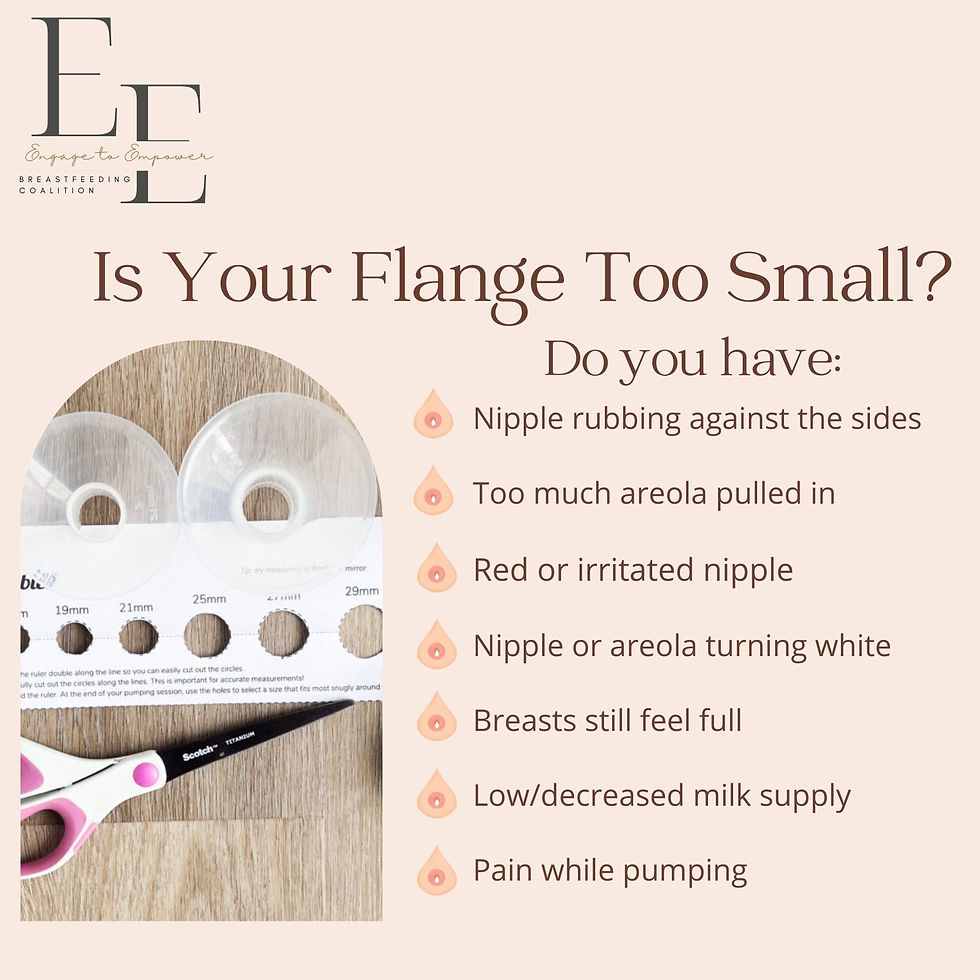
Here are some signs that your flange might be too small:
Signs Your Flange Is Too Small
Nipple Rubbing Against the Sides: If your nipple feels like it’s being pulled or rubbed inside the flange tunnel, it could be too tight. A snug fit is important, but not too tight!
Too Much Areola Pulled In: If you notice a lot of your areola (the darker part around your nipple) being pulled into the tunnel, your flange could be too small. Ideally, only a small portion of the areola should be drawn in.
Red or Irritated Nipple: After pumping, if your nipple is red, sore, or irritated, it’s a sign your flange might be too small. Prolonged discomfort could lead to damage or infection.
Nipple or Areola Turning White: If your nipple or the surrounding areola turns white during or after pumping, it might be a sign the flange is restricting circulation and is too tight.
Breasts Still Feel Full: If you feel like your breasts haven’t been fully emptied after pumping, it could mean that the flange is too small to allow for complete milk expression.
Low Milk Supply: A poorly fitting flange can reduce milk flow, leading to a lower milk supply over time. If you notice a decrease in your supply, it’s worth checking the size.
Pain While Pumping: If it hurts to pump, it’s a big red flag that your flange may be too small, causing discomfort or even nipple damage.
How to Check Your Flange Size
To ensure you’re using the right flange size, consider these guidelines:
🔸 Your nipple should move freely in the tunnel, without rubbing against the sides or being pulled too much. The goal is for it to fit comfortably, allowing it to move during pumping without friction.
🔸 The areola should stay mostly outside the flange, with only a small portion gently drawn in. You don’t want the entire areola sucked into the tunnel, as this can cause pain and reduce milk flow.
🔸 If you feel any pain or discomfort while pumping, stop and check your flange size! Pain is your body’s way of saying something isn’t right. You might need a different size to make your pumping sessions more effective and comfortable.
Time to Try a Different Size?
If any of the signs above sound familiar, it might be time to try a larger flange for better comfort and more efficient milk flow. Don’t settle for discomfort—your pumping experience should be as comfortable and effective as possible.
Need help getting measured for the right flange size? Message Leif for assistance! He can help you find the perfect fit to improve your pumping sessions and milk supply.
Remember, the right flange size can make all the difference. Don't let a poor fit affect your comfort or milk production—take the time to check your size and make adjustments if necessary!


Comments